
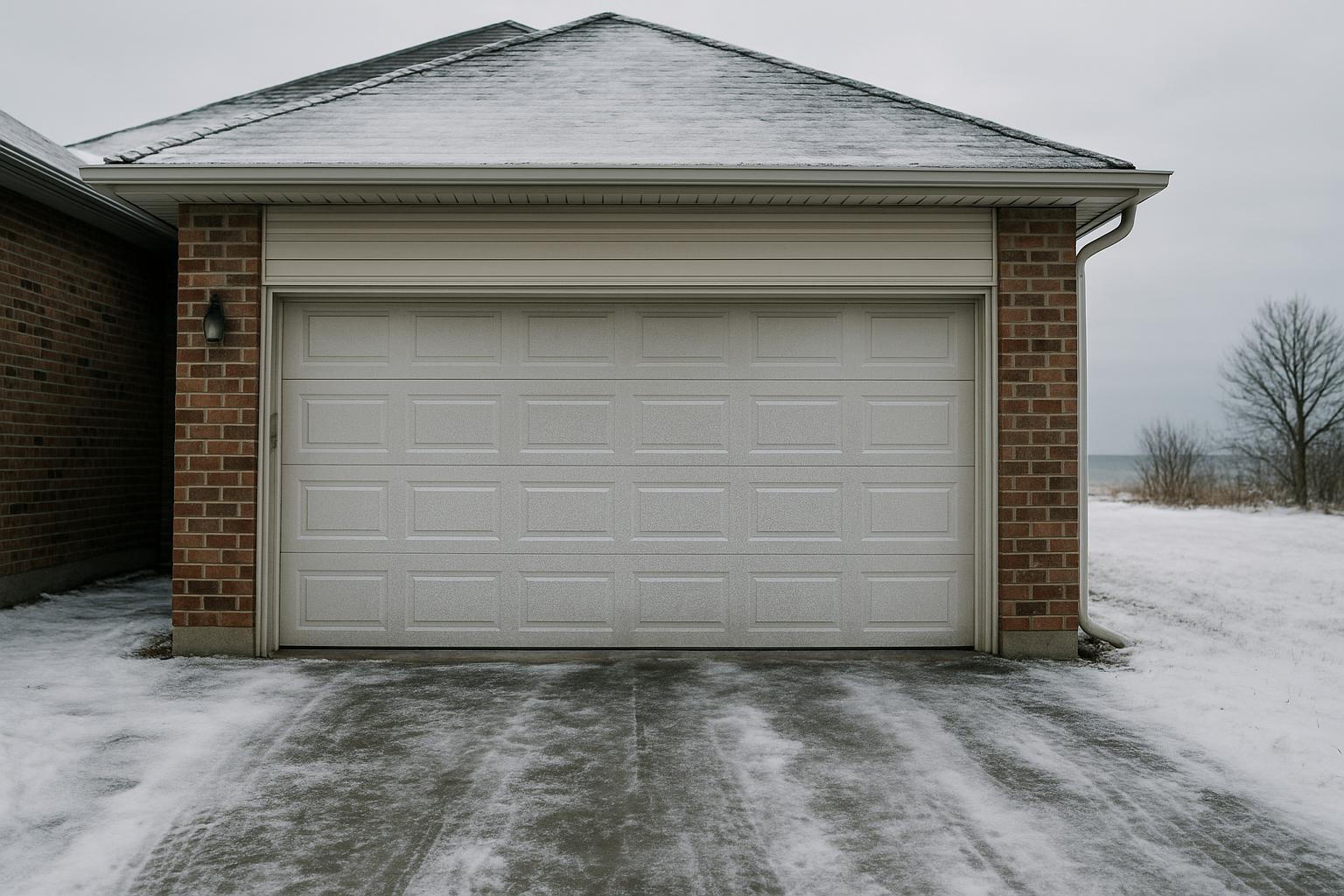
Winter and Your Garage Door: What Sandusky Homeowners Need to Know
Living near Lake Erie means dealing with some of the harshest winter conditions in Ohio. Between lake-effect snow, freezing rain, and temperatures that plummet well below freezing, Sandusky homeowners know that winter doesn't go easy on anything — including your garage door.
Your garage door is the largest moving part of your home, and cold weather puts serious stress on its mechanical components. If you've ever noticed your door moving slower than usual, making strange noises, or refusing to open on a frigid January morning, you're not alone. Let's break down exactly how cold weather affects your garage door and what you can do to keep it running smoothly all winter long.
Frozen Weatherstripping and Seals
One of the most common cold-weather garage door problems is the bottom seal freezing to the concrete floor. When moisture collects beneath the weatherstripping and temperatures drop overnight, that rubber seal can literally freeze to the ground. If you hit the opener button without realizing the seal is stuck, you risk tearing the weatherstripping, straining the opener motor, or even pulling the door off its tracks.
What to do: If your door seems stuck, don't just keep pressing the button. Step into the garage and check whether the bottom seal is frozen to the floor. You can carefully pour warm (not boiling) water along the base to melt the ice. To prevent this from happening repeatedly, apply a thin layer of silicone spray or cooking oil along the bottom seal before the next freeze.
Contracting Metal and Stiff Springs
Metal contracts in cold temperatures. That includes the steel tracks, hinges, springs, and rollers that make your garage door system work. When these components shrink even slightly, the door may bind, move unevenly, or feel heavier than normal.
Garage door springs are especially vulnerable to winter conditions. The steel loses some of its flexibility in extreme cold, making springs more brittle and more likely to snap. A broken spring in the middle of a Sandusky winter is more than an inconvenience — it can leave your garage exposed to the elements and compromise your home's security.
What to do: Have your springs inspected before winter arrives. If your springs are nearing the end of their lifespan (typically 7-10 years with normal use), replacing them proactively is far better than dealing with an emergency repair during a snowstorm.
Thickened Lubricant and Sluggish Movement
The lubricant on your garage door's moving parts — the rollers, hinges, tracks, and spring coils — can thicken or even solidify in freezing temperatures. When this happens, the door moves sluggishly, the opener works harder than it should, and you may hear grinding or squealing noises.
What to do: Use a silicone-based or lithium-based garage door lubricant rather than standard WD-40 or petroleum-based products. Silicone and lithium sprays are designed to perform in a wider temperature range and won't gum up when the mercury drops. Apply lubricant to all moving parts at least once before winter and again midseason.
Misaligned Safety Sensors
The safety sensors near the bottom of your garage door tracks can be knocked out of alignment by snow, ice buildup, or even the vibration of a door struggling against frozen components. When the sensors are misaligned or blocked, your door may refuse to close or reverse immediately after starting to move down.
What to do: Keep the area around your sensors clear of snow, ice, and debris. If the sensors have small indicator lights, check that both are lit and steady. A blinking light usually means the sensors are out of alignment and need to be adjusted.
Warping and Water Damage on Wooden Doors
If your home has a wooden garage door, winter presents an additional challenge. The freeze-thaw cycle common along the Lake Erie shoreline causes wood to expand and contract repeatedly, which can lead to warping, cracking, and peeling paint. Moisture that seeps into unprotected wood can freeze and cause the grain to split from the inside out.
What to do: Inspect your wooden garage door each fall for cracks, peeling paint, or areas where the finish has worn away. Seal any exposed wood with a quality exterior paint or stain before winter. If your wooden door is showing significant signs of deterioration, it may be time to consider upgrading to an insulated steel door that can handle Sandusky's winters without the constant upkeep.
The Opener Is Working Overtime
All of the issues above — frozen seals, stiff springs, thickened lubricant, binding tracks — force your garage door opener to work much harder than it was designed to. Over time, this extra strain can burn out the motor, strip the gears, or cause the logic board to fail. Opener repairs and replacements tend to spike in winter for exactly this reason.
What to do: If your opener sounds like it's struggling, don't ignore it. Disconnect the opener and try lifting the door manually. A properly balanced garage door should lift relatively easily by hand. If it feels extremely heavy, the problem is likely with the springs or hardware, not the opener itself. Getting those components serviced will take the strain off your opener and extend its life.
A Pre-Winter Maintenance Checklist
The best way to avoid winter garage door headaches is to schedule a maintenance visit before the cold sets in. Here's what a thorough pre-winter inspection should include:
- Inspecting and lubricating all moving parts with cold-weather lubricant
- Checking spring tension and overall balance
- Testing safety sensor alignment and function
- Examining weatherstripping and bottom seals for wear
- Tightening loose hardware that may have vibrated free over the year
- Testing the auto-reverse safety feature
- Inspecting the door panels for damage, rust, or warping
Taking care of these items in the fall can save you from unexpected breakdowns when you need your garage door most.
Don't Wait for a Breakdown
Winter garage door problems rarely fix themselves, and they almost always get worse as the season drags on. Whether you're dealing with a door that's already acting up or you want to get ahead of the cold with preventive maintenance, the team at Sandusky Door & Opener is here to help. We serve homeowners throughout Sandusky, Huron, Perkins Township, Milan, Vermilion, and Norwalk — and we understand what Lake Erie winters demand from your garage door.
Give us a call to schedule a winter maintenance visit or to get a fast repair before the next cold snap rolls in. A little attention now can save you a lot of frustration later.