
Your Garage Door Springs Are Under More Stress Than You Think
Every time your garage door opens and closes, the springs do the heavy lifting — literally. A standard two-car garage door can weigh between 150 and 250 pounds, and the springs are responsible for counterbalancing all of that weight. Most torsion springs are rated for around 10,000 cycles, which means if you open and close your door four times a day, you're looking at roughly seven years of use before they reach the end of their lifespan.
For homeowners in Sandusky, the combination of humidity from Lake Erie, temperature swings, and salt air can accelerate wear on metal components, including your springs. That's why it's important to know the warning signs of spring failure before you're stuck with a door that won't budge on a Monday morning.
What Do Garage Door Springs Actually Do?
Before we get into the warning signs, it helps to understand how springs work. There are two main types of garage door springs:
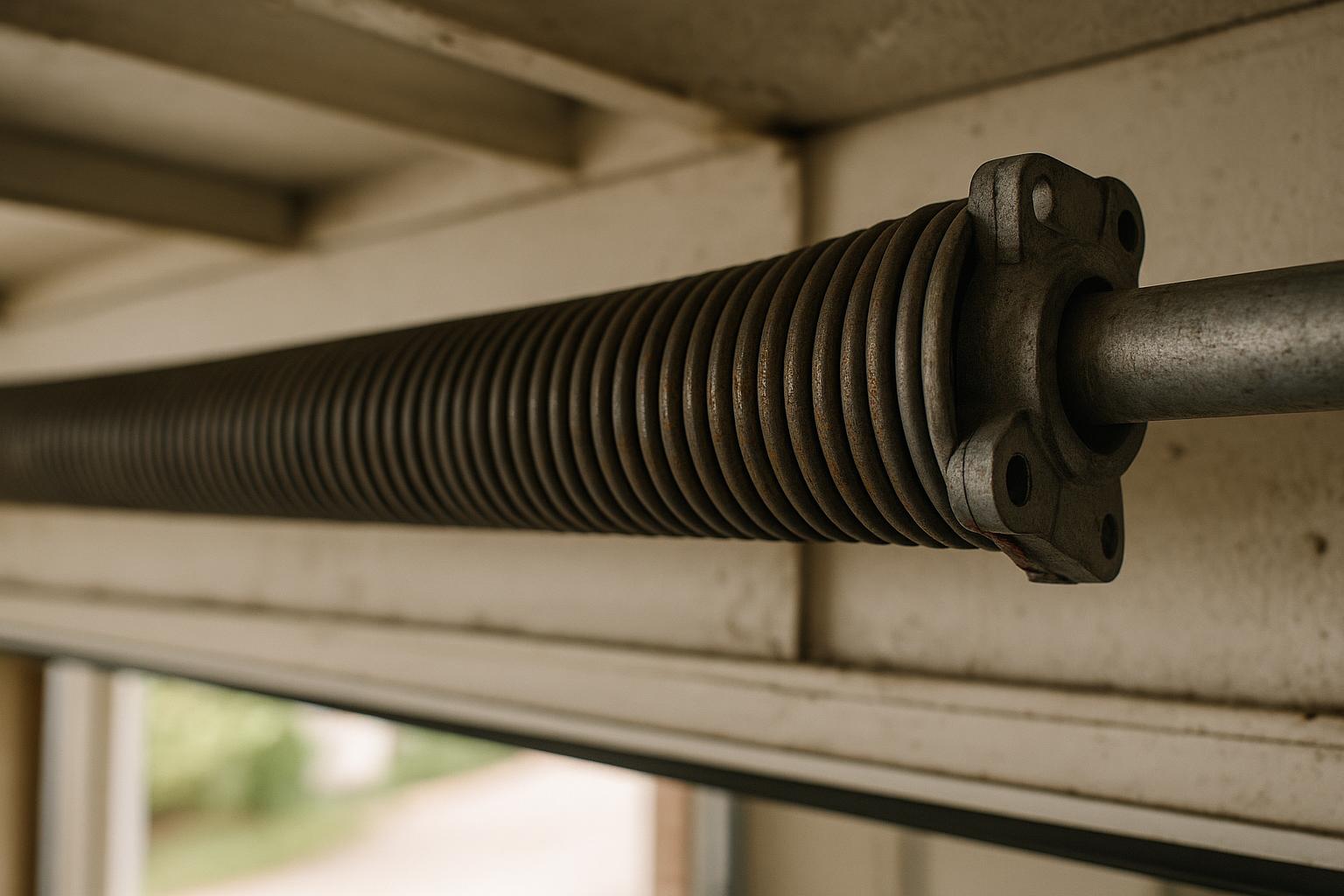
- Torsion springs — These are mounted on a metal shaft above the door opening. They twist and unwind to raise and lower the door. Most modern residential doors use torsion springs.
- Extension springs — These run along the horizontal tracks on either side of the door. They stretch and contract to assist with movement. They're more common on older or lighter doors.
Both types store a tremendous amount of energy. When they break, it can be loud, sudden, and potentially dangerous. That's why catching the problem early is so important.
7 Warning Signs Your Springs Are Failing
1. Your Door Feels Heavier Than Usual
Try this simple test: pull the emergency release handle and manually lift your garage door about halfway. If the springs are in good shape, the door should stay in place on its own. If it feels extremely heavy or immediately starts sliding back down, your springs are losing tension and nearing the end of their life.
2. The Door Opens Unevenly or Crooked
If one spring is weaker than the other — or if one has already broken — your door may rise unevenly. You might notice one side lifting faster than the other, or the door may look crooked as it moves along the tracks. This puts extra strain on your opener and the remaining spring, which can lead to a cascade of problems.
3. You Hear Loud Squeaking or Grinding
Some noise during operation is normal, but if you're hearing increasingly loud squeaking, popping, or grinding sounds, it could mean the coils are rubbing together or the springs are losing their lubrication. In Sandusky's humid climate, rust can build up on springs faster than in drier areas, which accelerates this issue.
4. Visible Gaps in the Spring Coils
Take a look at your torsion spring above the door. A healthy spring has tightly wound coils with no visible gaps. If you see a noticeable separation or gap between the coils — especially near the center — the spring has likely already broken or is very close to breaking.
5. The Door Slams Shut Quickly
When springs are functioning properly, they control the speed at which your door closes. If your door has started dropping faster than usual or slamming shut, the springs are no longer providing adequate resistance. This is a safety hazard, especially if you have children or pets who use the garage.
6. Your Opener Is Struggling
Your garage door opener is designed to guide the door, not lift its full weight. If the springs are failing, the opener has to work much harder. You might notice the motor straining, the door moving slower than normal, or the opener stopping mid-cycle. Continuing to use a struggling opener with bad springs can burn out the motor entirely, turning one repair into two.
7. Rust and Corrosion on the Springs
This one is especially relevant for homeowners along the Lake Erie shoreline. The salt air and moisture that come with living near the water can cause rust to form on your springs. Rust weakens the metal, reduces flexibility, and shortens the spring's lifespan. If your springs look orange or flaky, it's time to have them inspected.
Can You Replace Garage Door Springs Yourself?
We strongly advise against it. Garage door springs are under extreme tension, and attempting a DIY replacement without the proper tools and training can result in serious injury. A torsion spring that snaps unexpectedly can cause broken bones, lacerations, or worse. Every year, emergency rooms across the country treat injuries from DIY garage door spring repairs.
Professional technicians have the winding bars, experience, and safety equipment to replace springs quickly and correctly. At Sandusky Door & Opener, a typical spring replacement takes about an hour, and we make sure the door is properly balanced and tested before we leave.
How to Extend the Life of Your Springs
While springs won't last forever, there are a few things you can do to get the most out of them:
- Lubricate regularly — Apply a silicone-based garage door lubricant to your springs, hinges, and rollers every few months. This reduces friction and helps prevent rust.
- Schedule annual maintenance — A professional tune-up once a year can catch small problems before they become expensive repairs. This is especially important in our area, where weather conditions are tough on garage door components.
- Upgrade to high-cycle springs — If you're replacing springs, consider investing in high-cycle springs rated for 25,000 or even 50,000 cycles. They cost a bit more upfront but can last two to five times longer than standard springs.
- Keep the door balanced — An unbalanced door puts uneven stress on the springs. If your door doesn't pass the halfway lift test mentioned above, call a technician to adjust the balance.
When to Call a Professional in Sandusky
If you've noticed any of the warning signs above, don't wait for the spring to snap completely. A broken spring means your car could be trapped in the garage, your home security is compromised, and the repair becomes more urgent — and sometimes more expensive.
At Sandusky Door & Opener, we serve homeowners throughout Sandusky, Huron, Perkins Township, Milan, Vermilion, and Norwalk. Whether you need a quick spring replacement or a full garage door inspection, our team can diagnose the issue and get your door back in working order fast.
Don't ignore the warning signs. A little attention now can save you from a big headache later. Give us a call or reach out online to schedule a spring inspection today.