
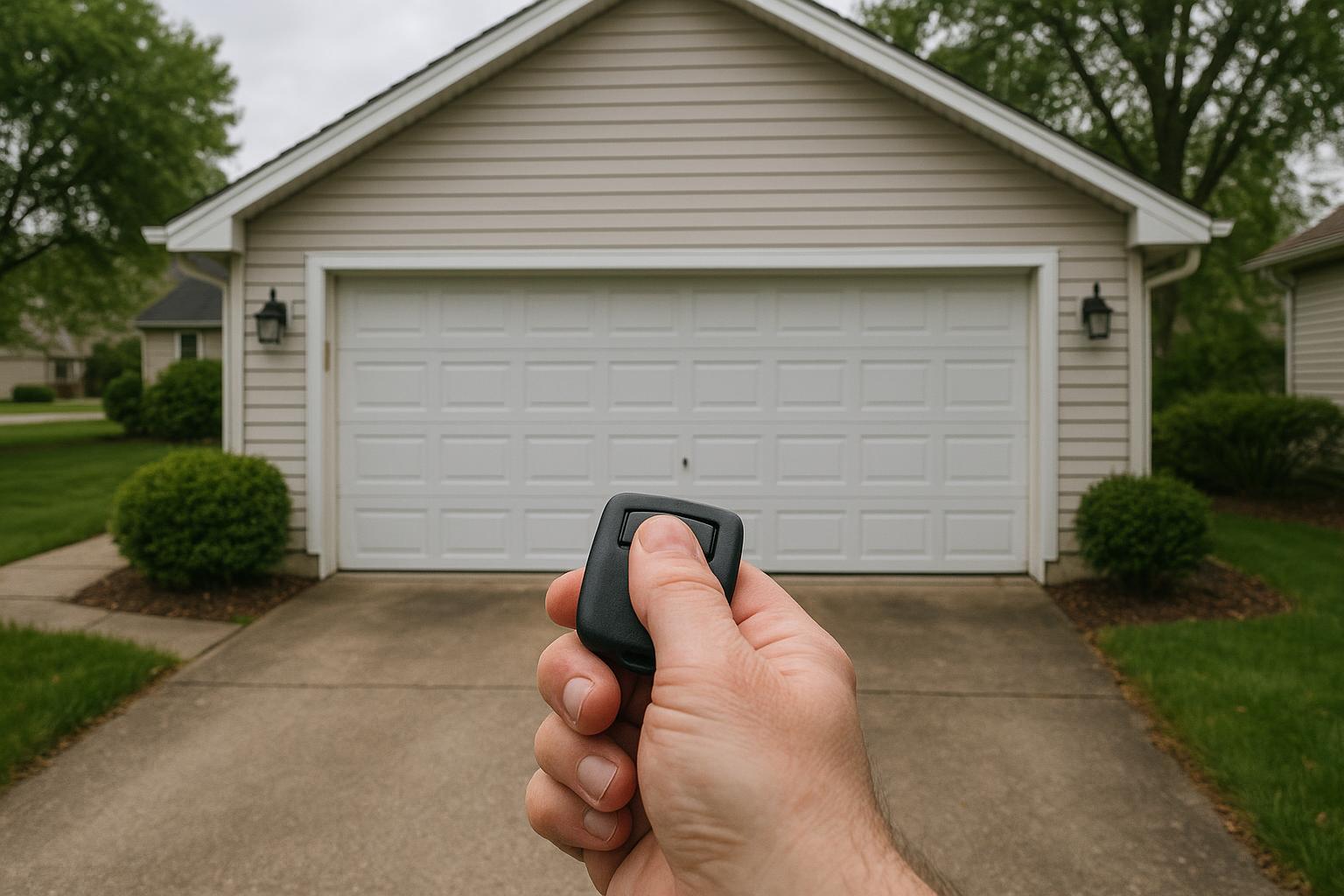
Stuck in the Garage? Here's What to Check First
It's 7:15 a.m. on a Monday in Sandusky. You're running late, coffee in hand, and you press the garage door button — nothing happens. Or maybe the motor hums but the door doesn't budge. Few things are more frustrating than a garage door that refuses to open when you need it most.
Before you panic or start searching for a way to climb over your car, take a breath. Many garage door problems have straightforward causes, and some you can even troubleshoot yourself. In this guide, we'll walk through the most common reasons a garage door won't open and help you figure out whether it's a quick fix or something that needs professional attention.
1. Check the Obvious: Is the Opener Getting Power?
It sounds almost too simple, but this is the number one thing to check. Garage door openers need electricity to work, and power interruptions are more common than you'd think — especially in Sandusky, where lake-effect storms can knock out power or trip breakers without warning.
- Check the outlet. Plug something else into the outlet your opener uses. If it doesn't work, you may have a tripped breaker or a dead outlet.
- Check your breaker panel. Look for a tripped breaker and reset it.
- Check the opener unit itself. Make sure it's plugged in. Vibrations from the door can sometimes loosen the plug over time.
If power isn't the issue, move on to the next step.
2. Look at Your Remote and Wall Button
If the wall-mounted button opens the door but your remote doesn't, the problem is likely with the remote — not the door or opener.
- Replace the batteries. Dead remote batteries are one of the most common causes of a "broken" garage door. Fresh batteries solve the problem more often than you'd expect.
- Re-program the remote. Sometimes remotes lose their connection to the opener. Check your opener's manual for reprogramming instructions.
- Check the range. If the remote only works when you're very close to the door, the antenna on the opener unit may be damaged or blocked.
If neither the remote nor the wall button works, the issue is likely with the opener or the door itself.
3. Inspect the Safety Sensors
Modern garage door openers have photo-eye safety sensors mounted near the floor on both sides of the door. These sensors send an invisible beam across the opening, and if anything breaks that beam — or if the sensors are misaligned — the door won't close. In some cases, sensor issues can also prevent the door from opening properly.
- Check for obstructions. Move any boxes, tools, or debris that might be blocking the sensors.
- Clean the lenses. Dust, cobwebs, and dirt can interfere with the beam. Wipe both sensors with a soft cloth.
- Check alignment. Both sensors should have a steady light (usually green). If one is blinking, it's likely misaligned. Gently adjust it until the light holds steady.
4. Look for a Locked or Disconnected Door
If you hear the motor running but the door doesn't move, the door may be disconnected from the opener. Most garage door openers have an emergency release cord — a red handle hanging from the track. If this has been pulled, the door is disconnected from the drive chain or belt.
To reconnect it, simply pull the cord back toward the opener and then activate the opener with the wall button. The trolley should re-engage automatically on most models.
Also check whether the manual lock on the door has been engaged. Many garage doors have a slide lock built into the handle. If someone locked it manually, the opener will strain against a locked door and fail to open it. This can actually damage your opener over time, so it's worth checking right away.
5. The Door Is Off Its Tracks
If your garage door looks crooked, has a visible gap on one side, or seems jammed partway up, it may have come off its tracks. This can happen due to an impact (like bumping the door with a car), worn rollers, or loose track brackets.
Do not try to force a door that's off its tracks. A garage door is extremely heavy — most residential doors weigh between 150 and 250 pounds — and forcing it can cause serious injury or further damage. This is a situation where you should call a professional.
6. Broken Springs or Cables
If you hear a loud bang from your garage and the door suddenly won't open, there's a good chance a torsion spring has snapped. Springs are under extreme tension and are responsible for counterbalancing the weight of the door. When one breaks, the opener simply can't lift the door on its own.
Signs of a broken spring include:
- A visible gap in one of the springs mounted above the door
- The door feels extremely heavy when you try to lift it manually
- The opener motor runs but the door barely moves or doesn't move at all
- Loose or hanging cables on either side of the door
Spring and cable repairs are dangerous and should always be handled by a trained technician. The tension involved can cause serious injury. If you suspect a broken spring, leave the door alone and call for help.
7. Stripped Gears in the Opener
If you hear the motor running and it sounds normal, but the door doesn't move and there's no obvious issue with springs or tracks, the gears inside your opener may be stripped. This is common in older chain-drive openers that have seen years of heavy use.
A grinding or whirring sound without any door movement is the classic sign. A technician can replace the gear kit in most openers without needing to replace the entire unit, which saves you money.
When to Call a Professional
Some garage door issues are safe to troubleshoot on your own — dead batteries, tripped breakers, and dirty sensors are all fair game. But anything involving springs, cables, tracks, or internal opener components should be left to a professional. The risks of injury and further damage simply aren't worth it.
If you're in Sandusky or the surrounding communities like Huron, Perkins Township, or Vermilion, Sandusky Door & Opener can diagnose and fix the problem quickly. We work on all major brands of garage doors and openers, and we've seen just about every issue a Lake Erie winter — or summer — can throw at a garage door.
Don't Let a Stuck Door Ruin Your Day
A garage door that won't open is inconvenient, but it's rarely the end of the world. Start with the simple fixes — power, batteries, sensors — and work your way through the list. If you hit a wall or suspect something more serious like a broken spring or a door off its tracks, give us a call. We'll get your door moving again so you can get back to your day.