
That Frustrating Moment When Your Garage Door Won't Stay Closed
You press the button on your garage door opener, the door starts its descent, and then — right before it touches the ground — it reverses and goes back up. You try again. Same thing. Maybe you try holding the wall button down, and it finally closes, but the moment you let go, it climbs right back up.
This is one of the most common garage door complaints we hear from homeowners in Sandusky and the surrounding communities. The good news is that it's usually not a catastrophic failure. The bad news is that ignoring it leaves your garage wide open — literally — to weather, pests, and security risks. Let's walk through the most likely causes and what you can do about each one.
Understanding Your Garage Door's Safety System
Before we dive into troubleshooting, it helps to understand why your door reverses in the first place. Modern garage door openers manufactured after 1993 are required by federal law to include two safety mechanisms:
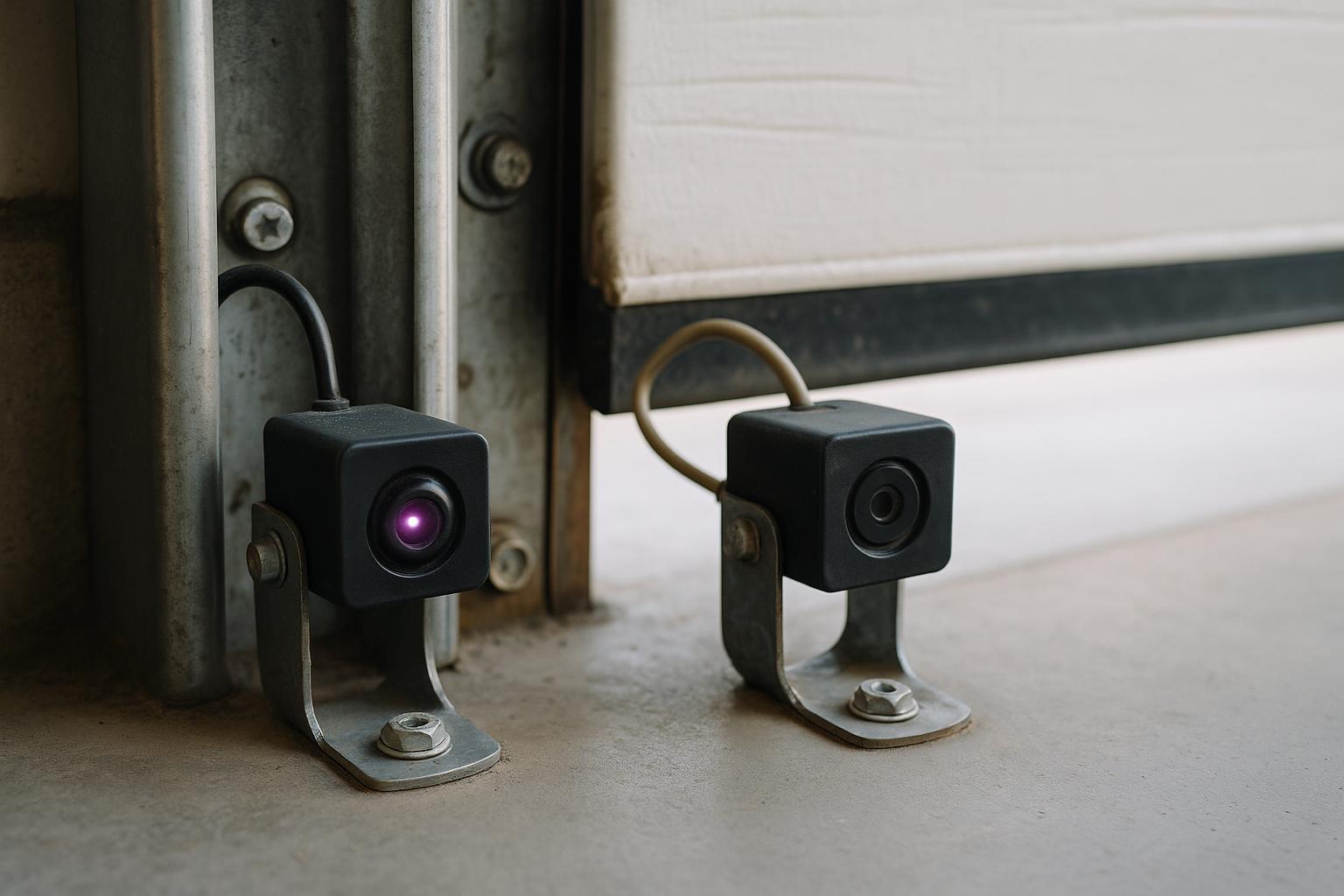
- Photo-eye sensors: Two small sensors mounted near the bottom of your garage door tracks that send an invisible beam across the opening. If something breaks the beam, the door reverses.
- Auto-reverse force settings: If the door encounters resistance while closing — like hitting an object or the floor too hard — it automatically reverses direction.
Both of these systems exist to prevent injuries and property damage. When your door reverses unexpectedly, one of these systems is almost always the reason. The trick is figuring out which one and why it's being triggered.
Cause #1: Misaligned Photo-Eye Sensors
This is the number one reason garage doors reverse before closing, and fortunately, it's often the easiest to fix. The photo-eye sensors on either side of your garage door opening need to be precisely aligned with each other. If one gets bumped — by a bike, a lawnmower, a kid, or even vibration over time — the beam is broken, and the opener thinks something is in the way.
What to check:
- Look at the small LED lights on each sensor. On most models, both lights should be steady (not blinking). A blinking light usually indicates misalignment.
- Gently adjust the sensor that's blinking until the light becomes steady.
- Make sure nothing is blocking the path between the two sensors — cobwebs, dirt, leaves, or even direct sunlight can interfere with the beam.
- Clean the sensor lenses with a soft cloth. Here along the Lake Erie shoreline, humidity and dust buildup can cloud the lenses surprisingly fast.
Cause #2: Dirty or Damaged Sensor Wiring
If realigning the sensors doesn't solve the problem, the issue might be in the wiring. The thin wires running from each sensor back to the opener unit can become frayed, pinched, or disconnected over time. Rodents are also notorious for chewing through sensor wires in garages, especially during cold Sandusky winters when they're looking for shelter.
Inspect the wires visually along their entire length. If you see any obvious damage, this is a repair best handled by a professional to ensure proper reconnection and safe operation.
Cause #3: Incorrect Close-Force Settings
Your garage door opener has adjustable settings that control how much force it uses when closing. If the close-force setting is too low, the opener interprets normal contact with the ground as an obstruction and reverses the door.
What to check:
- Locate the force adjustment screws or dials on your opener unit — they're usually labeled "open force" and "close force" or marked with up and down arrows.
- Turn the close-force dial slightly (a quarter turn at a time) in the direction that increases force.
- Test the door after each small adjustment.
- Be careful not to set the force too high. The door should reverse if it encounters real resistance, like a box or a person's hand. Test this by placing a 2x4 flat on the ground where the door meets the floor. The door should reverse upon contact.
Cause #4: The Close-Limit Switch Needs Adjustment
The limit switch tells your opener how far the door should travel before it's considered fully closed. If the limit is set so the opener tries to push the door past the floor, it thinks it's hitting an obstruction and reverses.
Adjusting the limit switch varies by opener brand and model. On most units, there's a small screw labeled "down limit" that you can turn incrementally. If you're not comfortable making this adjustment, or if you're unsure which screw controls what, it's worth calling a technician to handle it correctly.
Cause #5: Worn or Broken Springs and Hardware
Sometimes the problem isn't the opener at all — it's the door itself. If your garage door springs are worn, weakened, or broken, the door becomes significantly heavier for the opener to move. The opener may interpret this extra weight as an obstruction and reverse.
Signs of spring problems include:
- The door feels very heavy when you try to lift it manually
- The door closes unevenly or appears crooked
- You heard a loud bang from the garage (a common sign of a spring breaking)
- Visible gaps in the torsion spring above the door
Important safety warning: Garage door springs are under extreme tension and can cause serious injury if handled improperly. Spring replacement should always be performed by a trained professional. This is not a DIY job.
Cause #6: Track Problems
Bent, misaligned, or obstructed tracks can create enough resistance to trigger the auto-reverse. Inspect your tracks visually for dents, debris, or sections that have pulled away from the wall. Minor debris can be cleared easily, but bent tracks typically need professional attention to avoid making the problem worse.
When to Call a Professional
Some of these fixes — cleaning sensors, adjusting alignment, clearing debris — are well within a homeowner's ability. But if you've worked through the basics and your door is still reversing, or if the problem involves springs, tracks, or wiring, it's time to bring in a garage door technician.
At Sandusky Door & Opener, we troubleshoot reversing doors regularly for homeowners across Sandusky, Huron, Perkins Township, and the surrounding area. In many cases, we can diagnose and resolve the issue in a single visit. Whether it's a simple sensor adjustment or a spring replacement, we'll get your door closing properly and your garage secured again.
Don't Leave Your Garage Open to the Elements
A garage door that won't close isn't just an inconvenience — it's a security risk and an open invitation for weather damage, especially with the storms and temperature swings we experience along the Lake Erie shoreline. If your door keeps reversing and you can't pinpoint the cause, give us a call. We'll take a look, explain exactly what's going on, and get it fixed right.